Hemp fabric is a natural textile made from the long bast fibers found in the stalk of the hemp plant (Cannabis sativa). Similar to linen, hemp is breathable, durable, biodegradable when left untreated and unblended with synthetics, and becomes softer with wear and washing. It can be woven or knitted into everything from lightweight shirts and dresses to denim, underwear, bedding, and accessories.
Hemp is also considered one of the more promising natural fibers from an environmental perspective. The plant can grow quickly, can be cultivated with relatively few agricultural inputs under the right conditions, and can be grown as a rain-fed crop in some regions. However, simply seeing “hemp” on a clothing label doesn’t automatically make something sustainable. How the crop is grown, processed, dyed, blended, and turned into clothing all matter.
Below, we’re taking a closer look at what hemp fabric is, how it’s made, its benefits and disadvantages, how it compares to cotton and linen, and some of our favorite sustainable clothing brands using hemp today.
Disclosure: Some of the links below are affiliated; we may earn a small commission if you click through and make a purchase. We only feature brands that align with our values and contribute to a better world. Thank you for supporting these brands – and us! Cover Image: Jungmaven
What Is Hemp Fabric?
Hemp fabric is a natural textile made from the fibers of the hemp plant, a variety of Cannabis sativa grown specifically for industrial uses. The strong fibers found in the plant’s stalk can be processed and spun into yarn, which is then woven or knitted into fabric for clothing, accessories, bedding, and other textiles.
Hemp is often considered a more sustainable fabric choice because the plant is fast-growing, naturally hardy, and can typically be cultivated with fewer pesticides and herbicides than many conventional crops. It can also produce a relatively high amount of fiber on a small area of land. As with any fabric, though, its overall environmental impact depends on how the hemp is grown, processed, dyed, and manufactured.
In clothing, hemp has a texture somewhat similar to linen. It’s breathable, durable, naturally moisture-wicking, and tends to become softer with washing and wear. You’ll also often find hemp blended with organic cotton or other natural fibers to create a softer fabric while maintaining hemp’s strength.
For those of us trying to choose more natural fibers and reduce the amount of plastic-based synthetics in our wardrobes, hemp is one of our favorite fabrics to look for. And because hemp garments can be incredibly durable, they’re especially well suited to the idea of buying fewer, better-made pieces and keeping them in our closets for years.

What Is Hemp Made From?
Hemp fabric is made from the long, strong fibers found in the stalk of the hemp plant (Cannabis sativa). These are known as bast fibers; the same general type of plant fiber used to make fabrics like linen from flax. After the hemp is harvested, the stalks go through a process called retting, which helps separate the usable fibers from the woody parts of the plant. The fibers are then cleaned, processed, spun into yarn, and woven or knitted into hemp fabric.
Because hemp comes directly from a plant, it is a natural fiber rather than a synthetic or plastic-based textile like polyester or nylon. Pure hemp fabric can feel a little crisp or linen-like at first, but it generally softens beautifully with washing and wear. It can also be blended with fibers like organic cotton to create a softer, more flexible fabric while retaining some of hemp’s natural durability.
What Is a Hemp Plant?
Hemp plants are able to produce all sorts of interesting and useful products, from seeds and oil used in both skincare and food products to concrete, paper, bio-plastics, fashion fibers and beyond. The possibilities with this plant really can seem endless!
Let’s get into the technicalities of what this plant really is. The first thing to note is that hemp plants are not marijuana plants. These are technically the same plant species, but they have been bred for different traits and purposes. Cannabis plants have higher levels of THC, which is the substance that can alter a person’s mental state. Legally, a hemp plant has below 0.3% THC content in dry weight. This is important to understand because while hemp and cannabis do not have the same psychoactive potential, hemp growth is strictly regulated and still sometimes banned because of their shared species type. The legal limitations of hemp growth are unfortunate because the many sustainable products hemp can be turned into are less common than they perhaps could be.
When you compare plants grown for ‘narcotic’ purposes and plants grown for their fiber, the former has a thicker, hard center, while the latter has more bast, with a more hollow center. This is so that more energy can go towards the growth of the fiber bundles of bast – which is what hemp material is made from.
Another interesting element to hemp plants and production is that, at the moment, farmers generally cannot produce hemp seed and seed oil products alongside hemp fiber. This is partially to do with the sex of the plant, which alters the thickness and length of fibers, and because harvesting hemp for fiber normally takes place before seeds would have grown enough to be harvested themselves.

How Is Hemp Fabric Made?
Once hemp crops are harvested, the bast fibers basically need to be peeled off of the stem. This process is called retting. Traditionally, this could be done naturally, with fibers being laid out and weathered over up to a month, so that the wooden center and the bast fibers which are bonded together, can separate out. In this natural method, part of the plant decomposes, making it easier for the fibers to be pulled off the stem and apart.
Nowadays, it’s much more common for hemp retting to take place in a more controlled and mechanical way, using enzyme sprays and chemicals, which is more environmentally impactful. After the retting, the fibers are further processed until they can be made into one long thread for weaving or knitting. Most hemp clothing and bedding is dyed (and sometimes bleached to assist with dyeing) beforehand, too.
How Can Hemp Fiber Be Used?
Hemp is a more coarse fiber than one like cotton, so often we see the two fibers blended together as one material. For example, it’s very common to see hemp and organic cotton blend t-shirts and underwear made by more sustainably minded brands.
With a similar texture to linen, some bedding can be made of hemp, too. Hemp is also able to be woven into thicker materials that make up sturdy canvas bags and rugs, or lighter tweed and plaid styled skirts. For the winter months, hemp can be knitted into yarn (also often blended with other plant fibers) for scarves, sweaters and beanies.
What Does Hemp Fabric Feel Like?
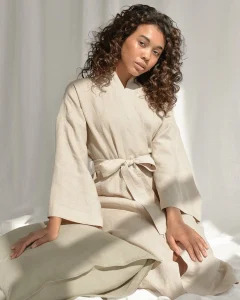
Hemp fabric has a natural, slightly textured feel that’s often compared to linen. When it’s brand new, 100% hemp can feel a little crisp or structured, but one of the things we love about this fabric is that it tends to get softer with every wash and wear. Despite its strength, hemp can be surprisingly comfortable. It’s breathable and lightweight, making it a great natural fabric for warm-weather clothing, although heavier hemp fabrics can work beautifully for jackets, pants, and year-round pieces.
The exact feel will also depend on how the fabric is made. Hemp blended with organic cotton tends to feel softer and more familiar right away, while pure hemp often has that relaxed, slightly lived-in texture we associate with linen. So, if you love the look and feel of linen but want another durable, plant-based natural fiber in your wardrobe, hemp is definitely one worth trying.
What Are the Benefits of Hemp Fabric?
There are plenty of reasons hemp has become one of our favorite natural fibers. Beyond its sustainability potential, hemp fabric is practical, comfortable, and incredibly durable, making it a great choice for pieces you want to keep in your wardrobe for a long time.
- Breathable: Hemp allows air to circulate through the fabric, helping you stay cooler and more comfortable; especially in warm weather.
- Durable: Hemp fibers are naturally strong, which means well-made hemp clothing can hold up beautifully to regular wear. That durability is a big sustainability bonus, since keeping clothing longer can help reduce how often we need to replace it.
- Gets softer with wear: Like linen, hemp can feel slightly crisp when it’s new, but it tends to soften with washing and wear without losing its strength.
- Absorbent: Hemp is naturally absorbent and can take in moisture, making it a comfortable choice for clothing worn in hot or humid conditions.
- Biodegradable: Pure, untreated hemp is a plant-based natural fiber and can biodegrade under the right conditions. Keep in mind that dyes, chemical finishes, synthetic blends, threads, and other garment components can affect whether a finished piece is truly biodegradable.
- Great for warm-weather clothing: Thanks to its combination of breathability and moisture absorption, hemp works particularly well for summer dresses, shirts, shorts, pants, and other lightweight pieces.
And while no fabric is completely impact-free, hemp’s combination of durability, comfort, and natural fiber content makes it a material we love seeing more brands use.
What Makes Hemp Sustainable?
Hemp can be grown organically with more ease than other fiber crops because it is such a durable, thick-growing plant. Chemicals that might be added to fields of hemp to remove weeds are often not needed because they are ‘strangled’ by the thick hemp plants.
Organic crops have the benefit of ensuring no pesticide or herbicide pollution, which can harm surrounding insect populations and, in turn, ecosystems. Organic crops also do not have synthetic fertilizers put on them to help growth, which can mean less synthetic nutrients runoff, which can potentially cause eutrophication. Eutrophication leads to reduced oxygen levels in natural waterways full of aquatic life. Manure used as organic fertilizer contains phosphorus that can also lead to the same eutrophication risks.
The fullness of hemp plants that prevents weed growth also means that the crop can be very efficient in its use of land, and that it can grow in a range of different soils very well. Land use efficiency is critical to sustainability because the more land we use for agriculture, the less land we have to support a biodiverse array of plant and animal life.
Hemp can also be grown as a rain fed crop, meaning that it’s grown with no more water than comes out of the sky. This is, of course, a positive, considering that freshwater is a precious resource and one which everyone on the planet needs to survive.
Lastly, the fact that hemp is, of course, a plant, means that it is biodegradable. The greatest thing about this is that 100% hemp material clothing, or clothing made of hemp that’s blended with other plant fibers, won’t hang around for thousands of years after we’ve stopped wearing them. In a world full of harmful microplastics that hurt our oceans and land-based ecosystems, this is great news.
Are There Any Disadvantages to Hemp Fabric?
The key word across some of the many reasons hemp is sustainable is ‘can’. Hemp can be grown organically, and it can be grown as a rain fed crop, but that does not mean it always is. Hemp is grown non-organically and as an irrigated crop across many parts of the world. This means that the water-saving aspect of hemp is not inherent to the plant, but dependent on the particular way it is farmed.
Let’s talk more about hemp that’s organic or not. It’s worth noting that non-organic crops aren’t always terrible. For example, Bt, a naturally occurring bacteria, is applied over organic cotton, but genetically placed into Bt cotton. This makes the Bt cotton, like the cotton grown in Australia, considered non-organic. However, it also removes the need to spray substances that kill insects which Bt protects cotton from. If we’re talking hemp, pesticides and fungicides can be used to prevent the risk of harmful fungi and bacteria growth, mites, beetles and other bug infestations destroying the crop. It is not sustainable for an entire crop to die off – wasting the resources that were spent growing them. At the same time, there are plenty of pesticides and herbicides that are used carelessly and at rates that are unsafe for surrounding life, as well as for workers on farms. If there is no transparency in hemp supply chains about whether it is organic or not, and if not, how these chemicals are used, that can be a real problem.
All of this means that typically grown hemp, according to data from Sustainable Apparel Coalition, is not so much less environmentally impactful to produce than conventional cotton. This is a good reason to look for organic hemp, and hemp that is transparently grown in a mindful way! There’s lots out there, and it’s worth asking brands about. This is all to say that hemp is a far more sustainable material than so many others, but as with everything, sustainability in agriculture and fashion is a little more complicated than it may first seem!
Organic Hemp vs. Conventional Hemp
You may see organic hemp listed on clothing labels and wonder whether it’s really that different from conventional hemp. Hemp is already known for being a relatively hardy crop, but organic certification can provide additional reassurance about how the plant was grown and processed.
Organic hemp is grown according to certified organic agricultural standards, which restrict the use of certain synthetic pesticides and fertilizers and prohibit genetically modified seeds. Depending on the certification, there may also be requirements surrounding textile processing, dyes, and other inputs used to turn the raw hemp fiber into fabric.
Conventional hemp isn’t necessarily a bad choice. Hemp can often be grown with relatively few agricultural inputs, and a farm that isn’t certified organic may still use responsible growing practices. Organic certification can also be costly, particularly for smaller farms and brands, so a lack of certification doesn’t automatically mean the hemp was grown unsustainably.
When we’re shopping, certified organic hemp is a wonderful option when it’s available, but we also look at the bigger picture: where the hemp comes from, how it’s processed, what it’s blended with, how the garment is dyed and finished, and how transparent the brand is about its supply chain.
And remember, “organic hemp” describes the fiber; not necessarily the entire finished garment. A piece could contain organic hemp blended with polyester or treated with additional finishes, which is why it’s always worth reading the full fabric composition and looking beyond a single sustainability claim.
Our Favorite Sustainable Hemp Clothing Brands
If you’re ready to add more hemp to your wardrobe, these are some of our favorite brands working with this durable natural fiber. You’ll find everything from everyday hemp T-shirts and underwear to dresses, pants, and hardworking outdoor clothing.

1. Jungmaven
Best For: Everyday Hemp Basics
Jungmaven is one of the first brands that comes to mind when we think about hemp clothing. Their collection is especially good for those easy, everyday pieces you’ll actually wear on repeat; like T-shirts, tanks, sweatshirts, shorts, and hemp denim.
We particularly love that you can find both 100% hemp pieces and hemp blends, including hemp mixed with organic cotton. Their hemp clothing comes in different fabric weights, too, so there are options for everything from lightweight summer tees to more substantial pieces. If you’re new to hemp and want an easy place to start, a Jungmaven tee is a great introduction.

2. Citizen Wolf
Best For: Made-to-Order Hemp T-Shirts
If finding the perfect-fitting T-shirt always seems impossible, Citizen Wolf offers a refreshingly different approach. Their tees are custom-made to order, helping reduce some of the excess inventory that comes with conventional clothing production.
Their women’s hemp tees are made from a 55% hemp and 45% organic cotton blend, giving you hemp’s durability with some of the familiar softness of cotton. They offer several classic silhouettes, including crew necks, V-necks, relaxed tees, and boat necks. Citizen Wolf also offers free repairs and recycling, which we love to see from a brand designing clothing with longevity in mind.

3. WAMA
Best For: Hemp Underwear
For hemp basics you can wear closest to your skin, WAMA Underwear is definitely worth knowing about. The brand specializes in hemp underwear, with styles for different bodies and preferences, from briefs and boy shorts to boxer briefs and trunks.
WAMA is also a great example of how hemp can work for more than just relaxed shirts and dresses. The naturally breathable fiber makes a lot of sense for everyday intimates, and the brand’s collection includes OEKO-TEX® certified options. Just remember that OEKO-TEX® relates to testing for harmful substances; it doesn’t mean a fabric is organic or entirely natural.

4. Toad&Co
Best For: Casual Hemp Clothing
Toad&Co has been a longtime favorite of ours for comfortable, easy-to-wear sustainable clothing, and they have a particularly nice selection of hemp pieces. You’ll find everything from wide-leg pants and dresses to tanks, shirts, and warm-weather staples.
One thing to pay attention to is the fiber blend. Toad&Co uses hemp alongside other materials, including organic cotton and TENCEL™ Lyocell. Their Taj Hemp collection, for example, uses a hemp/TENCEL™ blend to create lightweight, breathable pieces that work especially well for summer and travel.

5. Patagonia
Best For: Hemp Workwear & Outdoor Clothing
Patagonia has taken hemp beyond the basic summer tee, using the fiber in workwear, shirts, pants, overalls, jackets, dresses, and everyday basics.
We especially like seeing hemp used for hardworking clothing because its natural durability can really shine here. Patagonia uses hemp on its own and in blends with materials such as organic cotton, TENCEL™ Lyocell, and recycled polyester. We would prioritize their hemp and organic cotton blends when you’re looking for a more natural-fiber-focused option, since recycled polyester is still a synthetic fiber that can shed microplastics.
As always, we recommend checking the full fabric composition of an individual garment rather than shopping based on the word “hemp” alone. A hemp blend can still be a great option, but knowing what it’s blended with helps you choose a piece that best fits your own sustainability priorities.