Reformation is one of the most well-known brands in sustainable fashion. Celebrities wear it, influencers talk about it, & people often say it’s better than fast fashion. And honestly, in a lot of ways, that’s true.
So, is Reformation actually sustainable? Reformation is more sustainable than most mainstream fashion brands, but we wouldn’t call it perfect… or truly slow fashion. The brand deserves credit for its climate goals, transparency, lower-impact materials, RefScale reporting, and circularity initiatives. However, its frequent new releases, rapid growth, and continued use of some synthetic and regenerated materials make the answer more complicated.
I’ve spent 12 years covering sustainable fashion, and personally, I would purchase from Reformation, but I would avoid certain pieces. Reformation does many things right. But they also use some fabrics that I don’t really see as truly sustainable anymore. So let’s take an honest look at what they’re actually doing.
Transparency Disclosure: Our posts include affiliate links, which means we may earn a small commission if you choose to make a purchase, at no extra cost to you. We only feature brands that align with our values and contribute to a more responsible, sustainable fashion industry. Your support helps keep this work going, and we truly appreciate it. ♡
What Reformation Gets Right
There’s a reason everyone talks about Reformation when it comes to sustainable fashion.
1. Transparency & Reporting
Reformation puts out super detailed sustainability reports. They keep track of things like:
- Water use
- Carbon emissions
- Waste
- Factory standards
- Material sourcing
Their RefScale system lets you see the environmental impact of each piece of clothing, something most brands don’t do.
Being this open really matters.
2. Use of Natural & Lower-Impact Materials
One thing Reformation does deserve credit for is offering a wide range of natural fabrics, especially compared to most trend-driven brands.
Across many collections, Reformation uses materials such as:
- Linen, which is low-water, breathable, and biodegradable
- Organic cotton, grown without toxic pesticides or synthetic fertilizers
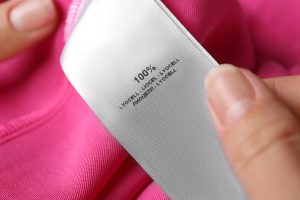
- TENCEL™ Lyocell, a semi-synthetic fiber made from wood pulp using a closed-loop process
- Responsible wool, which can be long-lasting and biodegradable when cared for properly (they even have regenerative!)
When Reformation leans into these materials, the garments align much more closely with what we now understand as genuinely lower-impact fashion. Linen dresses, organic cotton tops, and TENCEL™ basics are often some of the brand’s best pieces.
3. Circularity & Deadstock Use
Reformation also uses things like:
- Deadstock fabrics
- Repurposed vintage textiles
- Fabric remnants that would otherwise go to landfill
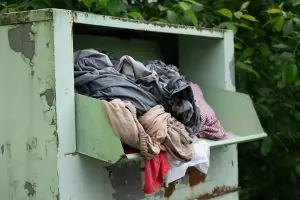
- Recycling program for their old clothing
This helps reduce the need for brand-new materials and prevents good fabric from being wasted.
From a waste standpoint, that’s a big deal. Unfortunately, many of these fabrics are polyester.
Is Reformation Ethical?
Reformation does more than many mainstream fashion brands when it comes to factory transparency and monitoring, but there are still some important gaps; particularly around living wages throughout its supply chain. Reformation makes some of its clothing at its own factory in Los Angeles, while the rest is produced through partner factories around the world. One thing we appreciate is the level of transparency here: the brand publicly shares its factory list and says it discloses 100% of its Tier 1 finished-goods manufacturers and subcontractors. Reformation has also aligned itself with the Transparency Pledge and participates in the Open Supply Hub.
Its direct cut-and-sew manufacturing partners are required to follow Reformation’s Code of Conduct, which references Fair Labor Association standards based on International Labour Organization principles. Tier 1 factories and strategic Tier 2 suppliers also participate in independent third-party social assessments covering issues such as wages, working hours, health and safety, discrimination, forced and child labor, freedom of association, and harassment. When problems are identified, Reformation uses corrective action plans and follow-up assessments rather than treating an audit as the end of the process.
We also like that Reformation has begun incorporating worker feedback into this process. The company uses anonymous Worker Sentiment Surveys at some factory audits and says it has uncovered concerns ranging from workers not feeling comfortable approaching supervisors to confusion about how wages are calculated. Those findings are then incorporated into its corrective action process.
What About Living Wages?
This is where we’d still like to see more progress. There’s an important difference between paying a country’s legal minimum wage and ensuring workers earn a living wage; enough to meet basic needs and maintain a decent standard of living. Reformation’s supplier requirements include meeting or exceeding applicable legal minimum wages, but that doesn’t necessarily mean every worker making its clothing earns a living wage.
Independent sustainability rating platform Good On You currently gives Reformation a “Good” rating for People and reports that the brand ensures living wages for some workers in its final production stage, but not throughout its entire supply chain.
So, is Reformation ethical? We think the brand deserves credit for its factory transparency, auditing systems, worker grievance mechanisms, and willingness to publicly identify areas that need improvement. But we’d like to see clearer evidence that living wages are being paid to workers throughout the entire supply chain before giving Reformation top marks for labor.
Is Reformation Climate Positive?
According to Reformation, yes; the brand says it achieved its Climate Positive goal in 2026. Reformation originally made the commitment back in 2020, with a goal of reducing its greenhouse gas emissions in line with science-based targets while investing in verified carbon removal projects that remove more carbon from the atmosphere than the company emits.
That distinction is important. In Reformation’s framework, being Climate Positive doesn’t mean the company produces no emissions. Instead, it means reducing its footprint according to its science-based targets and removing more carbon than its remaining emissions.
There is some nuance to the term itself, though. Reformation has openly acknowledged that there is no single standardized or globally agreed-upon definition of “Climate Positive.” The company created its own definition and roadmap for reaching the goal, so I wouldn’t treat the label in quite the same way as a standardized certification.
Still, setting measurable emissions-reduction targets and prioritizing actual carbon removal over simply purchasing avoidance-based offsets are meaningful steps. We just think it’s important to understand exactly what a sustainability claim means rather than taking terms like “Climate Positive” at face value.

What Materials Does Reformation Use?
Materials are one of the biggest things we look at when deciding whether we would personally purchase from a fashion brand, and Reformation actually offers quite a few options we like. That said, not every fabric in its collections would be our first choice.
Materials We Like From Reformation
If you’re shopping at Reformation, these are the fabrics we’d gravitate toward first:
- Organic cotton: One of our favorite everyday fibers, particularly when it’s certified organic.
- Linen: A durable, breathable natural fiber made from flax that can last for years with proper care.
- Responsible and recycled wool: We appreciate wool for its durability, warmth, and ability to stay in a wardrobe for a long time.
- TENCEL™ Lyocell: While not a natural fiber, TENCEL™ Lyocell is one of the regenerated fibers we’re more comfortable recommending thanks to its more controlled manufacturing process and sourcing standards.
- Silk: Another natural fiber we like, although we’d still consider sourcing and production practices when evaluating a particular garment.
This is an area where Reformation deserves some credit. There are plenty of pieces made entirely (or predominantly) from natural fibers, so it’s relatively easy to be selective about what you buy.
Materials We’d Be More Selective About
Reformation also uses fabrics that aren’t necessarily our first choice, including:
- Polyester
- Recycled polyester
- Nylon
- High-synthetic blends
- Conventional viscose/rayon
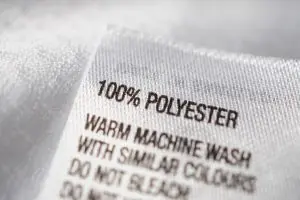
Polyester and nylon are fossil-fuel-derived synthetic fibers, and choosing recycled versions doesn’t eliminate all of their environmental drawbacks. They can still shed microplastics, and once multiple fibers are blended together, the finished garment can become much more difficult to recycle.
We’re a little more nuanced about viscose and rayon. These aren’t plastic-based synthetics (they’re regenerated cellulose fibers made from plant material) but conventional production can involve intensive chemical processing and problematic wood sourcing. When choosing a regenerated (or semi-synthetic) fiber, we’d generally prefer something with greater sourcing and manufacturing transparency, such as TENCEL™ Lyocell.
This doesn’t mean we’d automatically rule out every Reformation piece containing synthetics, either. A small amount of elastane can add necessary stretch, and synthetic fibers can serve a practical purpose in activewear and other performance clothing. For something like an occasional evening dress or jacket that you’ll wear for years and wash infrequently, we also wouldn’t necessarily consider a synthetic blend a dealbreaker.
For everyday pieces that will be worn and washed regularly, though, we’d personally gravitate toward Reformation’s natural-fiber options first. Fortunately, the brand gives shoppers quite a few of them.
Why Synthetics Are a Sustainability Problem
Even if they’re made from recycled plastic bottles, synthetic fabrics still:
- Shed microplastics every time they’re washed
- Never fully biodegrades
- Contribute to ocean and drinking water contamination
- Are made from fossil fuels (petroleum)
Recent studies show that recycled polyester can actually shed even more microplastics than regular polyester, since the fibers aren’t as strong.
So while recycled polyester sounds like a win, it often results in more pollution later.
That’s why, by 2026, some sustainability experts don’t see recycled polyester as a real solution, it’s just a slower version of the same problem.
The Greenwashing Gray Area
Reformation isn’t lying, but they are putting things in the best possible light.
When a dress is labeled “sustainable” because it uses recycled or deadstock polyester, that ignores the:
- Microplastic pollution
- End-of-life waste
- Chemical processing
- Non-biodegradability
I wouldn’t say Reformation is greenwashing, but I do think the conversation around textiles are evolving.
Is Reformation Fast Fashion?
Reformation isn’t traditional fast fashion in the same category as Shein or Zara, but it isn’t really slow fashion either. It releases new products frequently, follows trends, and operates at a significant scale. At the same time, it has substantially stronger environmental reporting, material standards, circularity programs, and climate commitments than most conventional fast-fashion brands.
I feel Reformation is closer to slow fashion than fast fashion, but they still:
- Drop new styles constantly
- Follow trends closely
- Encourage frequent purchasing
That doesn’t mean their clothes are throwaway, but they do need to sell a lot to keep growing. Sustainability gets complicated if a brand’s growth depends on selling more stuff, even if it’s a little better than what Zara makes. It doesn’t help how viral they have become on social media. I’m sure it makes sustaining a brand tricky. You want to please all these potential customers, but at what cost?
How to Shop Reformation More Sustainably
If you love Reformation’s style (and I get it – it’s super cute), here’s how to shop smarter:
Choose These Fabrics:
- Linen
- TENCEL™ Lyocell
- Organic cotton
- Wool / Cashmere
Skip These When Possible:
- Deadstock polyester
- Semi-synthetics like rayon (viscose)
Think of Reformation as a natural-fiber brand hiding inside a synthetic one; you just have to be a little picky.
In Conclusion…
Reformation helped make sustainability mainstream, and that’s worth giving them credit for.
But by 2026, the conversation has moved forward.
It’s not enough to just be “better than fast fashion” anymore.
Now we have to ask what our clothes are made of, how they break down, & what they leave behind.
And plastic, no matter how “green” it sounds, is still plastic.
But if you are able to avoid purchasing synthetic fabrics from Reformation, I think it’s a good sustainable choice. & of course, we should limit how much we buy. I’m all for treating yourself, but we don’t need to purchase something from every line they drop 🙂
Reformation Sustainability Scorecard
| Category | Our Take |
|---|---|
| 🍃 Materials | Good, but choose carefully |
| 🔍 Transparency | Very good |
| 🌎 Climate | Strong |
| 👥 Labor | Needs more scrutiny |
| ♻️ Circularity | Improving |
| 🧵 Production model | Faster than we’d like |
| 🌱 Natural fibers | Plenty of good options |
| 💚 Overall | Better than most mainstream fashion brands |
This is Sustainably Chic’s own assessment based on our review of Reformation’s materials, transparency, climate commitments, labor practices, circularity efforts, and overall production model. It is not an external rating or third-party certification.