If you’re trying to choose more sustainable fabrics, lyocell is one of those materials worth understanding. It’s soft, breathable, moisture-absorbing, and made from plant-based cellulose; but it isn’t quite the same thing as a natural fiber like cotton, linen, or hemp. Lyocell is a regenerated cellulose fiber, meaning the raw material comes from plants (typically wood) but must undergo chemical processing before it becomes the soft textile we wear.
You may also recognize lyocell by the name TENCEL™, but the two terms aren’t interchangeable. TENCEL™ is Lenzing’s trademarked brand, while lyocell is the generic name of the fiber itself. In other words, TENCEL™ Lyocell is lyocell, but not all lyocell is TENCEL™.
So, is lyocell actually sustainable? It can be a lower-impact option, particularly when the wood comes from responsibly managed sources and the manufacturing process uses effective solvent recovery. But, like most fabrics, its environmental impact depends on where the raw materials come from, how the fiber is manufactured, and how the finished garment is made. Ahead, we’re breaking down exactly what lyocell is, how it’s made, its pros and cons, and how it compares to TENCEL™, viscose, cotton, and other common fabrics.
What Is Lyocell Fabric?
Lyocell is a soft, breathable fabric made from cellulose, the natural material found in wood. Most lyocell begins with wood pulp (often sourced from eucalyptus, beech, birch, or spruce trees) which is dissolved and regenerated into fibers that can then be spun into yarn and woven or knitted into fabric.
While lyocell starts with a plant-based raw material, it isn’t technically a natural fiber like cotton, linen, or hemp. Instead, it’s considered a regenerated cellulose fiber (or semi-synthetic fiber) because the wood pulp must undergo chemical processing to become textile fiber.
One reason lyocell has become so popular in sustainable fashion is its production process. Compared with conventional viscose/rayon, lyocell is typically made using a closed-loop solvent system, where most of the solvent can be recovered and reused rather than discarded. This can make responsibly produced lyocell a lower-impact option among regenerated fibers.
You’ll find lyocell in everything from dresses and denim to underwear, activewear, bedding, and basics. It’s loved for its silky-soft feel, breathability, moisture management, and beautiful drape. And one important distinction: lyocell is the name of the fiber, while TENCEL™ is a brand name. TENCEL™ Lyocell is a specific type of branded lyocell made by Lenzing, but not all lyocell is TENCEL™.
What Is Lyocell Made From?
Lyocell is made from cellulose, a naturally occurring material found in plants and trees. The cellulose used for lyocell typically comes from wood pulp sourced from trees such as eucalyptus, beech, birch, and spruce. To turn that wood into wearable fabric, the pulp is broken down and dissolved in a solvent before being regenerated into long, smooth fibers. Those fibers are then washed, dried, spun into yarn, and woven or knitted into fabric.
Because lyocell begins with trees, you may see it described as a “natural” or “plant-based” fabric. However, that’s a little misleading. Lyocell is a regenerated cellulose fiber, meaning a natural raw material is chemically processed to create the finished fiber. This puts it in the same broad family as viscose/rayon and modal, although the manufacturing processes can differ significantly. When shopping for lyocell, it’s also worth looking at where the wood comes from and how the fiber is produced. Responsibly sourced wood and closed-loop processing can make a big difference in its overall environmental impact.
How Is Lyocell Made?
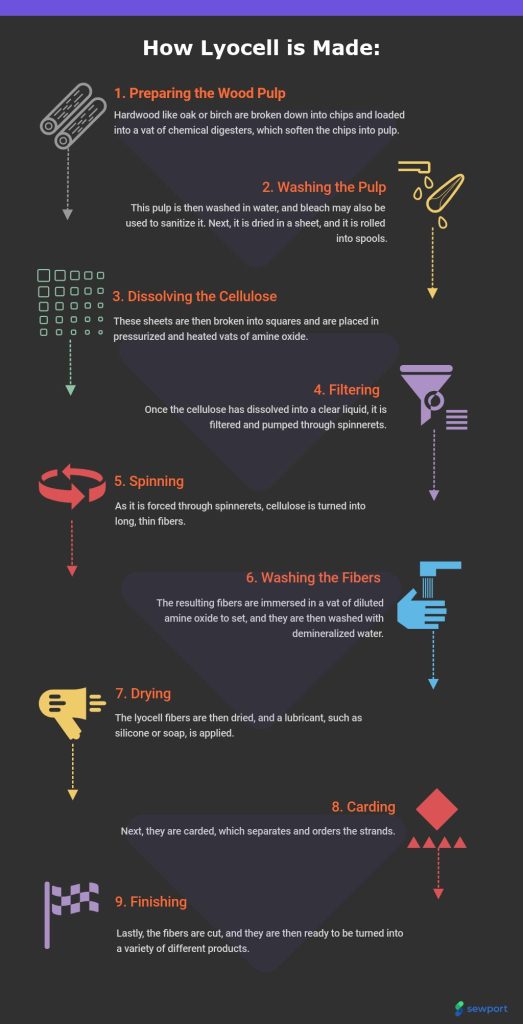
Lyocell starts with wood pulp, which is processed to extract cellulose. From there, the cellulose is dissolved in a solvent to create a thick solution that can be pushed through tiny openings called spinnerets, forming long, continuous fibers. These fibers are then washed, dried, spun into yarn, and eventually woven or knitted into fabric.
What makes the lyocell process particularly interesting from a sustainability standpoint is its closed-loop production system. Unlike conventional viscose production, lyocell typically uses an organic solvent called N-methylmorpholine N-oxide (NMMO), which can be recovered and reused during manufacturing. This helps reduce chemical waste and is one reason lyocell is often considered a more environmentally responsible regenerated cellulose fiber.
That said, not all lyocell is automatically sustainable. The environmental impact still depends on factors like where the wood was sourced, how the forests are managed, the energy used during production, and how responsibly the manufacturing facility operates. This is why we like looking for greater supply-chain transparency and responsibly sourced wood when choosing lyocell clothing.
(image: Sewport)
Is Lyocell Natural or Synthetic?
Lyocell falls somewhere between a natural and synthetic fiber. It starts with a natural raw material (cellulose from wood) but it must be chemically processed and regenerated into a textile fiber. Because of this, lyocell is most accurately described as a regenerated cellulose fiber, often called a semi-synthetic fiber.
Unlike fully synthetic fabrics such as polyester, nylon, and acrylic, which are generally made from fossil-fuel-derived plastics, lyocell is plant-based and cellulosic. However, it isn’t considered a true natural fiber like cotton, linen, hemp, or wool because it doesn’t go directly from its natural source to a spinnable fiber. So, while you may see lyocell marketed as a “natural fabric,” regenerated or semi-synthetic is a more accurate description. And when responsibly sourced and manufactured, lyocell can be one of the better options within this category.
What Does Lyocell Feel Like?
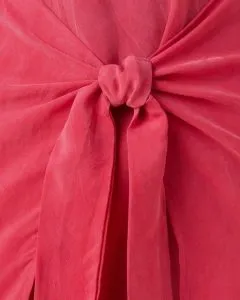
Lyocell is known for feeling soft, smooth, and lightweight against the skin. It has an almost silky texture with a beautiful drape, making it a popular choice for everything from flowy dresses and tops to pajamas, underwear, and bedding. The fabric is also breathable and moisture-managing, which can make it especially comfortable in warmer weather or for clothing worn close to the skin. Depending on how it’s woven or blended, lyocell can feel silky and fluid, soft like cotton, or even have the structure of denim.
One of our favorite things about lyocell is that you can get that smooth, luxurious feel without relying on a fully synthetic fabric like polyester. Just remember that the final feel will depend on the fabric construction, weight, finishes, and any other fibers it’s blended with.

Is Lyocell Breathable?
Yes, lyocell is a breathable fabric, which is one reason it’s such a comfortable choice for everyday clothing. Its cellulose-based fibers can absorb and manage moisture, helping move sweat away from the skin rather than trapping heat and moisture the way some synthetic fabrics can.
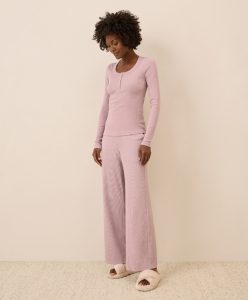
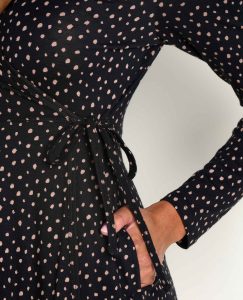
Lyocell’s breathability makes it especially nice for warm-weather clothing, pajamas, underwear, dresses, and other pieces worn close to the skin. It also tends to feel cool, smooth, and lightweight, although the exact breathability will depend on how the fabric is woven or knitted and whether it’s blended with other fibers. (pictured: Toad&Co)
If you’re trying to move away from polyester and other synthetics, lyocell can be a great alternative when you want something soft, breathable, and drapey; especially when the wood is responsibly sourced and the fiber is produced using a closed-loop process.
Is Lyocell Sustainable?
Lyocell can be a more sustainable fabric choice, particularly when compared with conventional viscose/rayon and petroleum-based synthetics like polyester. But, as with most fabrics, simply seeing “lyocell” on a clothing tag doesn’t automatically make a garment sustainable.
One of lyocell’s biggest advantages is its closed-loop production process. The solvent used to turn wood pulp into fiber can be recovered and reused, helping reduce chemical waste. And because lyocell is made from cellulose rather than fossil-fuel-derived plastic, it doesn’t come with the same microplastic concerns as polyester or nylon.
However, where the wood comes from matters. Poorly managed sourcing can contribute to deforestation and biodiversity loss, so we prefer lyocell made with wood from responsibly managed forests and manufacturers that are transparent about their supply chains.
Overall, we consider responsibly sourced lyocell one of the better regenerated cellulose fibers. It isn’t quite the same as choosing a minimally processed natural fiber like organic cotton, linen, or hemp, but its softness, breathability, versatility, and more responsible production process can make it a great option for a sustainable wardrobe.
Is Lyocell Biodegradable?
Yes, lyocell itself is biodegradable because it is made from cellulose, the naturally occurring material found in wood. Under the right conditions, an unblended lyocell fiber can break down naturally rather than persisting like petroleum-based synthetic fibers such as polyester or nylon.
However, that doesn’t mean every garment labeled lyocell is completely biodegradable. Clothing is often blended with elastane, polyester, or other synthetic fibers, and dyes, finishes, threads, buttons, and other components can affect how the finished garment breaks down. Biodegradable also doesn’t necessarily mean something can simply be tossed into your backyard compost.
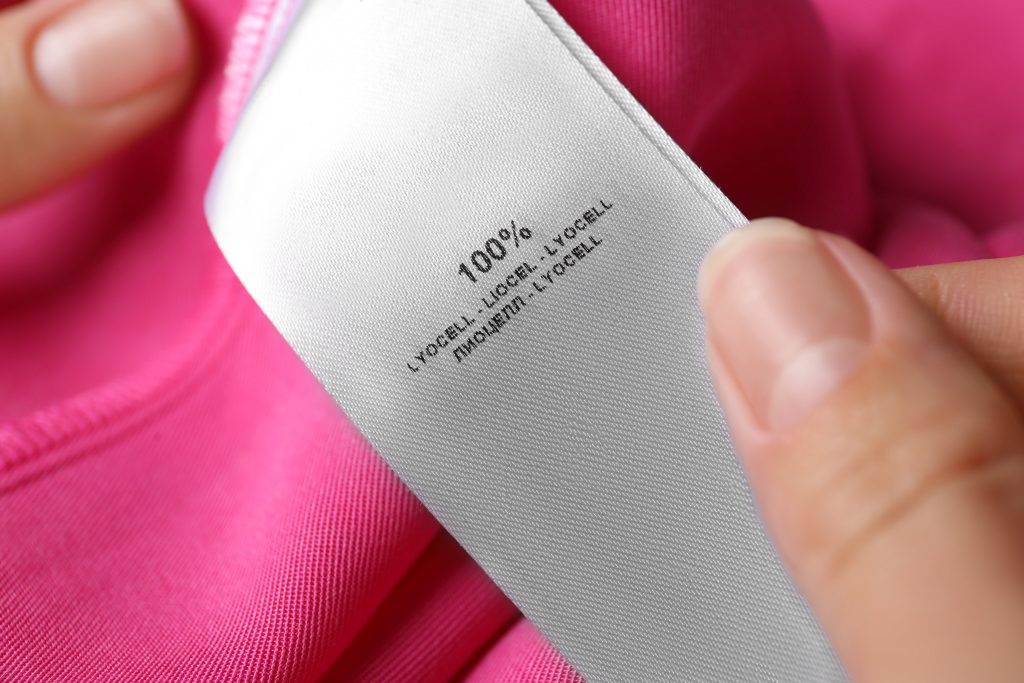
If biodegradability is important to you, look for 100% lyocell or lyocell blended with other biodegradable fibers, along with transparent information about dyes and finishes. It’s another reason we appreciate lyocell as an alternative to fully synthetic fabrics; while still remembering that fiber content is only one part of a garment’s overall impact.
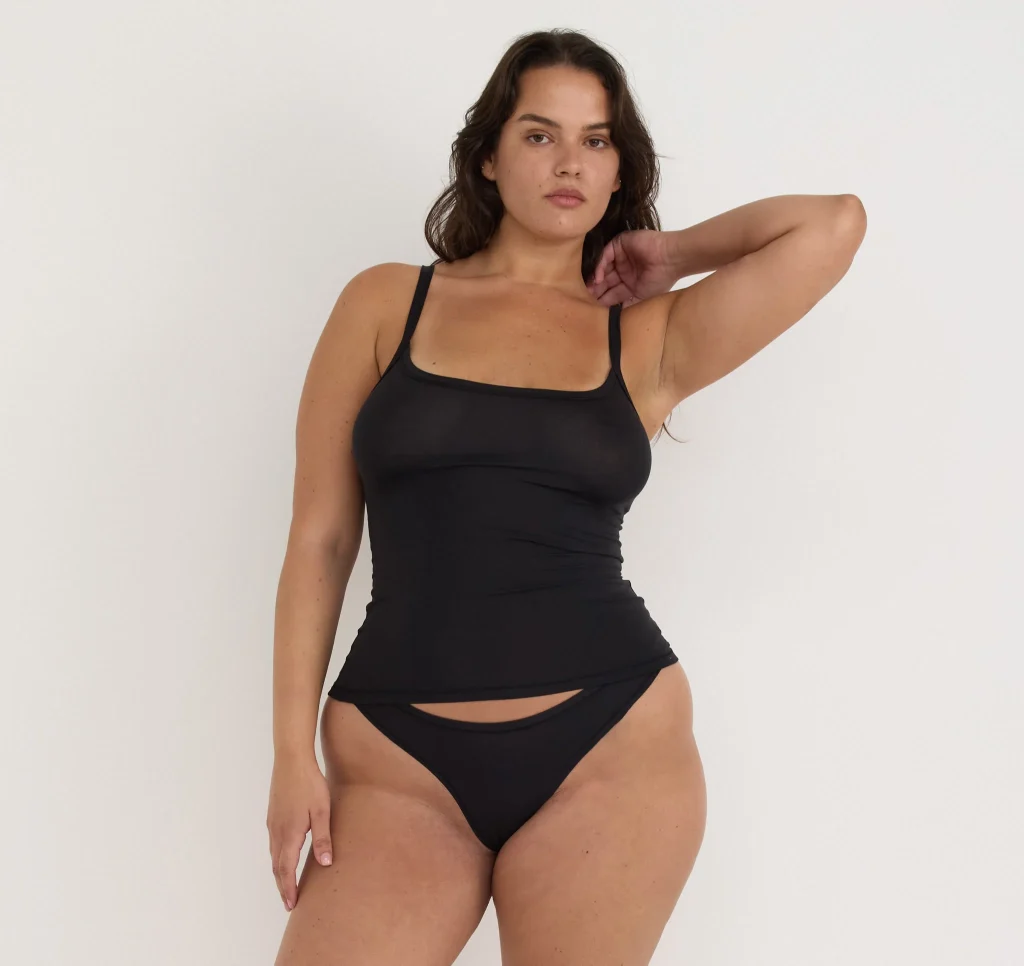
Is Lyocell Non-Toxic?
Lyocell is generally considered a lower-concern fabric when it comes to chemical exposure, especially compared with some heavily treated textiles. The fiber is made by dissolving wood-derived cellulose, most commonly with a solvent called NMMO, which is recovered and reused in the closed-loop manufacturing process. (pictured: Organic Basics)
However, we wouldn’t automatically call every lyocell garment “non-toxic.” Fiber content is only part of the story. Dyes, wrinkle-resistant treatments, antimicrobial finishes, PFAS-containing treatments, and other chemicals can be added to a fabric after the lyocell fiber itself has been produced.
If avoiding potentially harmful substances is a priority, look beyond the word lyocell on the label. Certifications such as OEKO-TEX® STANDARD 100 can provide additional reassurance because they test the finished textile for specified harmful substances. Just remember that OEKO-TEX doesn’t mean a fabric is organic or necessarily sustainable overall.
Overall, lyocell can be a great choice for a more natural-feeling, plastic-free wardrobe, particularly when it’s responsibly produced and minimally treated. We still recommend checking the entire garment (including blends and finishes) rather than assuming lyocell automatically means non-toxic.
Benefits of Lyocell Fabric
There’s a lot to love about lyocell, especially if you’re looking for a fabric that feels luxurious while offering some advantages over conventional regenerated fibers and petroleum-based synthetics.
Some of the biggest benefits of lyocell include:
- Soft & smooth: Lyocell has a silky, gentle feel that makes it especially comfortable for clothing worn close to the skin.
- Breathable: The fiber allows for good airflow, making it a great option for warmer weather, sleepwear, and everyday basics.
- Moisture-managing: Lyocell can absorb moisture and help keep the skin feeling more comfortable and dry.
- Beautiful drape: Its fluid, lightweight feel works particularly well for dresses, skirts, blouses, and other flowy pieces.
- Durable: Despite its softness, lyocell can be a relatively strong fiber when properly cared for, helping garments last longer.
- Plastic-free fiber: Unlike polyester and nylon, lyocell is cellulose-based rather than made from fossil-fuel-derived plastic.
- Biodegradable: Unblended lyocell can biodegrade under appropriate conditions, although dyes, finishes, and blended fibers can affect the finished garment.
- More responsible production is possible: Lyocell is typically produced using a closed-loop process that recovers and reuses the solvent, giving it an advantage over conventional viscose production.
Of course, lyocell isn’t perfect simply because it’s lyocell. Wood sourcing, manufacturing practices, dyes, finishes, and fiber blends all matter. But when responsibly sourced and produced, we think lyocell can be a wonderful addition to a more sustainable wardrobe; particularly when you want something softer and more fluid than fibers like linen or hemp.
Disadvantages of Lyocell
While lyocell has plenty of benefits, it isn’t a perfect fabric. Like any material, its environmental impact depends on how it’s sourced, manufactured, dyed, finished, and eventually cared for.
A few disadvantages of lyocell to keep in mind include:
- It requires chemical processing: Lyocell starts with natural wood cellulose, but it must undergo significant processing to become a wearable fiber. This is why we consider it regenerated or semi-synthetic rather than a true natural fiber.
- Wood sourcing matters: If the wood pulp isn’t responsibly sourced, cellulose-based fabrics can contribute to deforestation, habitat loss, and pressure on ancient or endangered forests.
- It can be more expensive: Responsibly produced lyocell often costs more than conventional viscose, polyester, and other inexpensive fabrics.
- It may require gentler care: Some lyocell garments can be prone to shrinking, wrinkling, or changes in texture when exposed to high heat or improper washing.
- Finishes can change the equation: Dyes and chemical treatments may be added during textile production, so a garment made from lyocell isn’t automatically non-toxic or low-impact.
- Blends aren’t necessarily plastic-free: Lyocell is frequently blended with polyester, nylon, or elastane. These blends lose some of the benefits of choosing a cellulose-based fiber, including full biodegradability.
For us, the advantages of responsibly produced lyocell generally outweigh the disadvantages, particularly when it’s used as an alternative to conventional viscose or fully synthetic fabrics. Still, we prefer to look for transparent sourcing, responsible manufacturing, and 100% lyocell or natural-fiber blends whenever possible.
Lyocell vs TENCEL™: What’s the Difference?
Lyocell and TENCEL™ are often used interchangeably, but they aren’t exactly the same thing. The easiest way to remember the difference is that lyocell is a type of fiber, while TENCEL™ is a brand name. Lyocell is the generic name for a regenerated cellulose fiber made from wood pulp. Different textile manufacturers can produce lyocell, which means you’ll often see simply “lyocell” listed on a clothing tag.
TENCEL™ is a trademarked brand owned by Austrian fiber manufacturer Lenzing. TENCEL™ Lyocell is Lenzing’s branded version of lyocell, produced from responsibly sourced wood using a closed-loop process designed to recover and reuse the processing solvent. So, all TENCEL™ Lyocell is lyocell, but not all lyocell is TENCEL™ Lyocell.
From a sustainability perspective, we tend to appreciate TENCEL™ because the branding provides more information about who made the fiber and how it was sourced and produced. Generic lyocell can still be a great option, but its environmental credentials may vary depending on the manufacturer and wood source.
One other important distinction: TENCEL™ doesn’t only mean lyocell. The TENCEL™ brand also includes modal fibers, so when you see TENCEL™ on a product, check whether the garment contains TENCEL™ Lyocell, TENCEL™ Modal, or a blend of the two.
Lyocell vs Viscose: What’s the Difference?
Lyocell and viscose have quite a bit in common. Both are regenerated cellulose fibers, meaning they start with a natural raw material (typically wood pulp) that is chemically processed and transformed into a wearable fiber. However, the biggest difference between lyocell and viscose comes down to how they are made.
Traditional viscose production typically relies on a more chemically intensive process involving substances such as carbon disulfide and sodium hydroxide. When these chemicals aren’t properly managed, viscose manufacturing can pose concerns for workers and surrounding environments.
Lyocell uses a different production method, most commonly involving the solvent NMMO in a closed-loop system. The solvent can be recovered and reused during manufacturing, which helps reduce chemical waste and gives responsibly produced lyocell an environmental advantage over conventional viscose. The fabrics can feel similar, too. Both tend to be soft, breathable, lightweight, and beautifully drapey, although the exact feel depends on how the fabric is made and finished.
If we’re choosing between the two, we generally prefer responsibly sourced lyocell over conventional viscose. That doesn’t mean every lyocell garment is sustainable (or every viscose garment is automatically a poor choice) but lyocell’s manufacturing process can offer some meaningful improvements.
Lyocell vs Modal: What’s the Difference?
Lyocell and modal are closely related. Both are regenerated cellulose fibers made from wood pulp, and both are known for being soft, breathable, and comfortable against the skin. The main difference comes down to how the fibers are produced and how they perform.
Lyocell is typically made by dissolving wood-derived cellulose in a solvent such as NMMO using a closed-loop process that recovers and reuses much of the solvent. The resulting fiber tends to be strong, breathable, moisture-managing, and beautifully drapey.
Modal is another type of regenerated cellulose fiber and is generally considered a modified form of viscose. It’s especially known for its exceptionally soft, smooth feel and ability to retain that softness through repeated washing, which is why you’ll often find it in underwear, pajamas, loungewear, and basics.
From a sustainability perspective, we generally prefer responsibly produced lyocell, particularly when sourcing and manufacturing are clearly disclosed. However, responsibly produced modal (such as TENCEL™ Modal) can also be a good option. And remember: TENCEL™ can refer to both lyocell and modal, so always check the full fiber content rather than assuming everything labeled TENCEL™ is lyocell.
Lyocell vs Rayon: What’s the Difference?
Lyocell and rayon can be confusing because lyocell is actually part of the broader rayon family. Rayon is an umbrella term for regenerated cellulose fibers made by transforming plant-derived cellulose (usually wood pulp) into textile fibers. Viscose, modal, and lyocell are all types of rayon.
The biggest difference is how lyocell is produced. Traditional viscose rayon typically uses a chemically intensive manufacturing process involving carbon disulfide, while lyocell is most commonly made using the solvent NMMO in a closed-loop system that recovers and reuses the solvent. Both fabrics can be soft, breathable, lightweight, and beautifully drapey, but lyocell also tends to be strong and good at managing moisture.
When it comes to sustainability, we generally prefer responsibly sourced lyocell over conventional rayon/viscose because of its more controlled production process. However, sourcing still matters; seeing “lyocell” on a label doesn’t automatically tell you where the wood came from or how responsibly the fiber was manufactured.

Our Favorite Lyocell Clothing Brands
Lyocell has become increasingly popular among sustainable clothing brands, and we love seeing it used for pieces where softness, breathability, and drape really matter. You’ll find it in everything from dresses and everyday basics to underwear, pajamas, and even activewear. (image: Reformation)
Some of our favorite brands using lyocell include
Many of these brands specifically use TENCEL™ Lyocell, while also incorporating materials like organic cotton, linen, and hemp into their collections. As always, we recommend checking the actual fabric composition of each garment rather than shopping by brand name alone. A piece made primarily from lyocell or blended with a natural fiber is going to be very different from one containing a significant amount of polyester or nylon.
And if you’re trying to reduce synthetic fabrics in your wardrobe, lyocell can be particularly useful for categories where polyester tends to dominate. Reprise, for example, uses TENCEL™ Lyocell as the primary fiber in its activewear, with a small amount of spandex added for stretch.
Overall, we look for brands that pair lyocell with responsible sourcing, thoughtful production, transparency, and clothing designed to be worn for years because choosing a better fiber is only one piece of building a more sustainable wardrobe.