If you’ve ever checked the fabric tag on a flowy dress, blouse, or skirt, there’s a good chance you’ve come across viscose. It’s soft, breathable, and made from plant-based cellulose, but that doesn’t necessarily make it a natural or sustainable fabric.
Viscose is a regenerated cellulose fiber, typically made from wood pulp that undergoes chemical processing before it can be spun into fabric. You may also hear viscose referred to as rayon, and it belongs to the same broader family of fibers as modal and lyocell.
So, where does viscose fit if you’re trying to build a more sustainable or natural-fiber wardrobe? It’s a little complicated. While I personally prioritize natural fibers like organic cotton, linen, hemp, and wool, not all viscose is created equal. How the wood is sourced and how the fiber is processed can make a big difference.
In this guide, we’ll break down what viscose is made from, how it’s produced, whether viscose is sustainable, its pros and cons, and how it compares to rayon, cotton, modal, and lyocell.
What Is Viscose Fabric?
Viscose is a regenerated cellulose fiber usually made from wood pulp sourced from trees such as eucalyptus, beech and pine. While its raw material comes from plants, the cellulose must undergo significant chemical processing to become textile fiber, which is why viscose is generally classified as a regenerated or semi-synthetic fiber rather than a natural fiber like cotton or linen.
What is Viscose Made Of?
Viscose is a cellulose material – like Tencel lyocell or modal – meaning it is made from wood pulp. In the case of viscose, this ‘wood’ is from beech, pine, and eucalyptus trees much of the time, but it can also be made of bamboo and even soy or sugarcane. One of the reasons Tencel is great is because of one particularly unsustainable aspect of viscose production: old-growth forest logging. Canopy, an organization dedicated to protecting forests, has found that for the production of viscose and rayon (essentially the same material), more than 200 million trees are logged each year. If these trees were placed end to end, they would circle our planet seven times!
While Tencel uses wood from certified sustainably managed sources, this is too often not the case for viscose. Less than 20% of the world’s ancient forests remain in intact tracts large enough to maintain critical biological diversity. Yet, forests in Indonesia, Canada’s Boreal and temperate rainforests, and the Amazon are being logged for fast and even luxury fashion. In fact, it’s estimated that 30% of viscose and rayon used in fashion is made from endangered and ancient forests which once were home to native plants and animals. If fashion brands and people wearing viscose don’t know where the raw material behind it (the wood) is coming from, sadly, it may be from destroyed endangered forestry.

How Is Viscose Made?
Once trees have been cut down, they are chopped into small pieces before being dissolved into a pulp. This is where viscose becomes semi-synthetic, as this is a very chemical-heavy process. Sodium hydroxide, carbon disulfide, and sulphuric acid are all used in this process and are all considered toxic.
Sodium hydroxide is highly irritating and corrosive, resulting in severe burns and permanent damage when it comes in contact with human tissue, including the eyes, which can also be permanently harmed and impaired due to exposure. In the case of carbon disulphide, evidence has suggested that exposure to this chemical by factory workers – as well as people living near viscose production facilities – can cause coronary heart disease, birth defects, skin conditions and even cancer. Meanwhile, sulphuric acid can cause severe skin burns, irritate the nose and throat, burn eyes, possibly cause blindness and difficulty breathing when inhaled by workers.
These toxic chemicals – amongst others – are used together in order to dissolve the wood chips into pulp, clean and bleach the pulp, and treat the pulp so that the solution, known as ‘viscose’, is produced. This viscose solution is then run through a spinneret, a machine that creates filaments or fibers. Finally, this cellulosic fiber can be spun into yarn and then made into fabrics used in fashion.
This chemical process can lead not only to poor health outcomes for workers, but often, to significant air and water pollution. Air emissions around viscose manufacturing facilities often include sulfur, nitrous oxide, carbon, disulfide, and hydrogen sulfide. (image: Sewport)
Is Viscose Natural or Synthetic?
Viscose is a little tricky because it doesn’t fit neatly into the natural or synthetic fabric category. Instead, it’s considered a regenerated (or semi-synthetic) fiber.
Viscose starts with a natural material, usually wood pulp from trees such as eucalyptus, beech, or pine. But that plant-based cellulose has to go through significant chemical processing before it can be turned into the soft textile we know as viscose. So while its raw material comes from nature, we wouldn’t consider viscose a true natural fiber in the same way we would cotton, linen, hemp, or wool.
It’s also important to point out that viscose is not a plastic-based synthetic fiber. Unlike polyester, nylon, and acrylic, which are typically made from fossil-fuel-derived polymers, viscose is made from regenerated cellulose.
Here’s an easy way to think about it:
| Fiber Category | Examples |
|---|---|
| Natural fibers | Cotton, linen, hemp, wool, silk |
| Regenerated / semi-synthetic fibers | Viscose (rayon), modal, lyocell |
| Synthetic fibers | Polyester, nylon, acrylic |
This middle category is one reason we think it’s worth looking beyond labels like “natural” or “synthetic” when choosing fabrics. With viscose, where the wood pulp comes from and how it’s processed can make a big difference in its overall environmental impact.
What Does Viscose Feel Like?
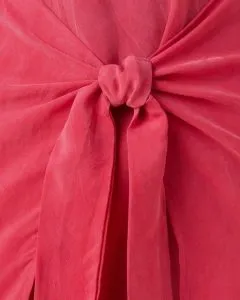
Viscose is typically soft, smooth, and lightweight, with a beautiful drape that makes it popular for flowy clothing. It’s often compared to silk because it can have a fluid feel and subtle sheen, although the exact texture will depend on how the fabric is woven, finished, or blended with other fibers. You’ll commonly find viscose in dresses, skirts, blouses, and other pieces where you want something soft that moves nicely against the body.
Is Viscose Breathable?
Yes, viscose is generally considered a breathable fabric. It’s also quite absorbent, which can help it feel comfortable against the skin in warmer weather. This combination of breathability, softness, and drape is one reason you’ll see so much viscose in summer dresses, lightweight blouses, skirts, and other warm-weather clothing. Just keep in mind that breathability can change when viscose is blended with less breathable synthetic fibers like polyester.
What Is Viscose Used For?
Viscose is a fairly silky, draped fabric that is often used by brands seeking a cheaper version of animal-derived silk. In the realm of fashion, it’s common to see it in women’s blouses, skirts, and flowing dresses, and even making up partially synthetic velvet. It’s considered a lightweight and breathable material that maintains shape, is absorbent, soft and dye-fast. This makes it fabric that is widely used when it comes to printed fabrics and summer collections.
Can Viscose Ever Be Made Sustainably?
While viscose is biodegradable, meaning it won’t pile up in landfill for thousands of years like polyester or another completely synthetic fabric, this alone doesn’t mean that it is sustainable. Deforestation and chemical pollution are serious issues, and the process of making viscose can also be highly water intensive – from the watering of growing trees to the significant water requirements during processing.
Fortunately, there are other ways to make viscose that are more sustainable. These processes are more expensive, so brands need to make clear commitments to prioritise the environment over profit, should they choose them. Since there’s no fashion if there’s no planet Earth, this should be an easy decision!
The previously mentioned Canopy non-profit produces an annual CanopyStyle report, which lays out the newest innovations and next-generation fibers in the textile space, that should allow us all to keep in line with set sustainability targets.
Certified Safer Logging
A great question to ask brands using viscose, is ‘where did the raw material come from?’. If brands can’t answer this for you, and if they can’t assure that the sourcing was responsible, according to a third-party accreditation, this is a real concern.
CanopyStyle offers brands plenty of information as to how they can source viscose responsibly. Brands that are a part of the CanopyStyle certification and program are also audited to ensure that ancient and endangered forests are protected from destruction. These better materials are considered ‘green-shirt’ rated.
Responsible, Closed-Loop Processing
Lenzing, the company that creates Tencel in a closed-loop system, also makes Ecovero, a viscose material derived from ‘certified renewable wood sources using an eco-responsible production process by meeting high environmental standards’.
Awarded the EU Ecolabel, Ecovero is manufactured with up to 50% fewer emissions and water impact than generic viscose. Importantly, Ecovero is also produced in a closed-loop, meaning that no harmful gases are released into the environment and are instead recovered, converted, and reused as raw materials.
Ecovero is made in a highly transparent supply chain, so brands can offer all the information that people deserve to know, about how this material was made, where, and from what.
Next-Generation Fibers, Made From Old Material
In order to combat deforestation, we cannot only rely on ‘sustainable sourcing’ of wood, from non-protected trees and forestry. We need to use less new raw materials in general. Fortunately, we don’t need to cut down so many trees in order to keep on making clothing.
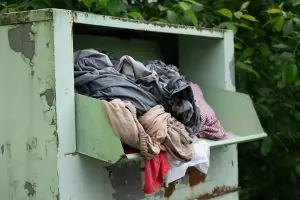
Our current fashion system is one built upon overproduction, overconsumption, and waste. Because of this, more than an enormous 25 million tonnes of cotton and viscose textile waste is generated annually around the world. While we also need to slow down how we produce and consume, today, we can make use of this waste by creating viscose that is, at the very least, partially recycled.
In fact, Canopy states that ‘all 6.5 million tonnes of viscose being produced this year could be made using only 25% of the world’s wasted and discarded cotton and viscose fabrics, thereby saving forests, reducing municipal and industrial waste to landfills, and reducing carbon emissions, energy, and water use.’ What an opportunity!
Pros & Cons of Viscose
| Pros | Cons |
|---|---|
| Soft | Conventional production can be chemical-intensive |
| Breathable | Can contribute to forest degradation when poorly sourced |
| Lightweight | Often weaker when wet |
| Beautiful drape | Can shrink |
| Absorbent | May require more careful washing |
| Plant-derived cellulose | Plant-based doesn’t necessarily mean sustainable |
| Biodegradable under appropriate conditions | Sustainability varies significantly by producer |
Viscose vs Rayon: What’s the Difference?
Viscose and rayon are often used interchangeably, which can make things a little confusing. Rayon is the broader family of regenerated cellulose fibers, while viscose is a type of rayon made using the viscose process. In fact, you may see the same type of fabric labeled “viscose” in one place and “rayon” in another.
If you’d like to dig a little deeper into the terminology, we have a full guide on rayon fabric.
Viscose vs Lyocell
Viscose and lyocell are both regenerated cellulose fibers typically made from wood pulp, but they’re produced differently. Lyocell is generally made using a more controlled, closed-loop process that recovers and reuses most of the solvent involved in production.
For this reason, we typically prefer lyocell over conventional viscose, especially when the wood is responsibly sourced. You can learn more in our guide to lyocell fabric.
Viscose vs TENCEL™
Here’s an important distinction: TENCEL™ is a brand name, not a generic type of fabric. TENCEL™ is Lenzing’s trademarked brand of regenerated cellulose fibers, including TENCEL™ Lyocell and TENCEL™ Modal.
So, while both viscose and TENCEL™ fibers begin with plant-based cellulose, they aren’t the same thing. We break this down further in our complete TENCEL™ guide.
Viscose vs Modal
Modal and viscose are both members of the rayon family and are made from regenerated cellulose. However, modal is manufactured somewhat differently and is known for being especially soft, smooth, and resistant to shrinking.
Neither is a true natural fiber, but both are plant-derived rather than plastic-based. Read our modal fabric guide for a closer look at how it’s made.
Viscose vs Cotton
The biggest difference is that cotton is a natural fiber, while viscose is a regenerated fiber. Cotton can be spun into fabric without first dissolving and chemically regenerating its cellulose, while viscose requires considerably more processing.
For my own wardrobe, I generally prioritize cotton, especially certified organic cotton, over conventional viscose when both are options. That said, sourcing, processing, dyes, finishes, and how long you’ll actually wear the garment all matter, too.
Viscose vs Polyester
Viscose and polyester may both be manufactured fibers, but they’re very different materials. Viscose is made from regenerated plant cellulose, while polyester is a synthetic plastic fiber typically derived from petroleum.
Conventional viscose production certainly has environmental concerns, but that doesn’t make viscose plastic. This is an important distinction, especially if you’re trying to reduce the amount of synthetic clothing in your wardrobe.
Is Viscose Biodegradable?
Viscose is made from cellulose, so the fiber itself can biodegrade under suitable conditions. However, that doesn’t necessarily mean every viscose garment will harmlessly disappear once you’re finished with it.
Dyes, chemical finishes, fabric blends, and disposal conditions can all affect what happens at the end of a garment’s life. A 100% viscose fabric is also very different from a viscose-polyester blend, which contains plastic-based synthetic fibers.
Does Viscose Shrink?
Yes, viscose can be prone to shrinking, particularly when exposed to heat or washed incorrectly. The fiber can also become weaker when wet, which means viscose clothing may need a little more care than something like cotton.
Always check the garment’s care label before washing, as recommendations can vary depending on the fabric and construction.
How to Wash & Care for Viscose
The best way to care for viscose is to follow the care instructions on the garment first. Some viscose pieces can be gently machine washed, while others may call for hand washing or dry cleaning.
When washable, we generally recommend using cold water, a gentle cycle, and a mild detergent. Avoid high heat, aggressive wringing, or anything that could stretch the fabric while it’s wet. Air drying is usually the gentler option and can also help reduce the risk of shrinking.
Taking good care of viscose can go a long way toward helping your clothing last longer, which is something we always prioritize regardless of the fabric.
Is Viscose Non-Toxic?
This one requires a little more nuance. There are real chemical concerns associated with conventional viscose manufacturing, particularly the use of carbon disulfide, which can pose serious risks to workers when it isn’t properly controlled.
However, the chemicals used during manufacturing and the safety of a finished viscose garment against your skin are not the same question. We wouldn’t assume that wearing a viscose dress exposes you to carbon disulfide in the same way workers may be exposed during production.
If you’re concerned about substances that may remain in finished textiles, certifications such as OEKO-TEX® STANDARD 100 can provide additional reassurance because they test textiles for specified harmful substances. Just remember that an OEKO-TEX certification doesn’t mean the viscose is organic, natural, plastic-free, or necessarily sustainable overall.
For our own wardrobes, we’d still prioritize viscose from more transparent producers with responsible sourcing, better chemical management, and lower-impact manufacturing whenever possible.

What to Look for When Buying Viscose
Not all viscose is made the same way, so if you’re buying it, a little transparency can go a long way. We like to look for brands that tell you who produced the fiber, where the wood pulp came from, and how the viscose was processed, rather than simply listing “viscose” on the tag.
Some things worth looking for include responsibly managed forest sources, FSC or PEFC-certified wood, responsible chemical management, and manufacturers working toward more traceable, lower-impact production. Canopy’s rankings and commitments can also be helpful when evaluating how companies are addressing the risk of sourcing cellulose from Ancient and Endangered Forests.
We also prefer more traceable options like LENZING™ ECOVERO™, as well as newer recycled and next-generation cellulose fibers that can reduce reliance on virgin wood pulp. Of course, you don’t need to memorize every certification or fiber producer before buying a dress. If you’re choosing viscose, we’d simply prioritize greater traceability, responsible sourcing, and better manufacturing practices whenever that information is available.
Not very many sustainable brands use EcoVero, but Threads 4 Thought has a few pieces in their collection that does.